
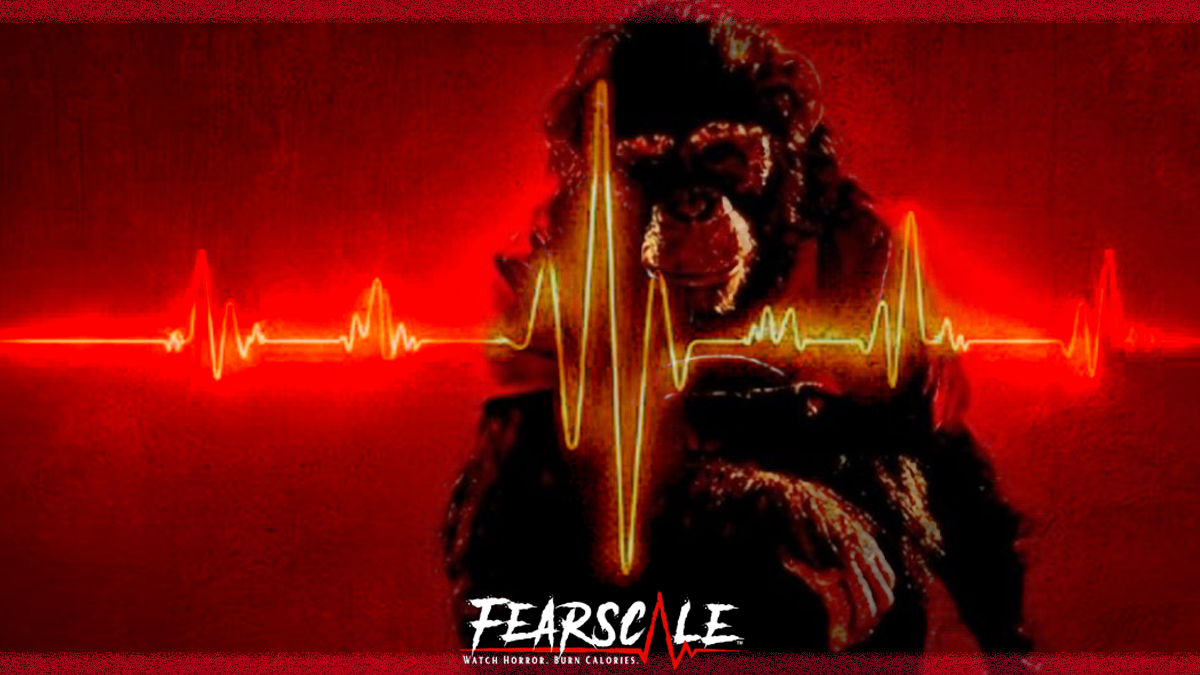
Primate (2025) is a natural horror film that premiered at Fantastic Fest 2025, and from the first trailer, it looked ominous, savage, and tailor-made for a FearScale test.
Could our latest FearScale test subject, who has a real-life history with wild animals and a deep-rooted fear of them, withstand the relentless terror of this blood-soaked creature feature?
The answer came fast.
SYNOPSIS:
A group of friends’ tropical vacation turns into a terrifying, primal tale of horror and survival.
FearScale™ Methodology
FearScale measures how frightening a horror film truly is by monitoring real-time heart rate data from human test subjects during controlled viewing sessions. Each subject’s baseline resting heart rate is recorded prior to the film, allowing us to identify meaningful spikes caused by tension, dread, shock, or sustained unease.
Heart rate increases are tracked throughout the runtime and correlated with specific scenes to determine when fear responses occur, and how intense they are. This data-driven approach helps separate genuine physiological reactions from subjective opinions or post-viewing impressions.
Because fear is personal, FearScale does not claim universal results. Instead, each session offers an objective snapshot of how a film impacts the human body under consistent conditions, providing a unique, measurable lens on horror.
Viewing Conditions:
To ensure clean FearScale data, Primate (2025) was viewed at home in a controlled, low-distraction environment with all lights dimmed and no interruptions permitted. The subject had no prior exposure to the film, its spoilers, or extended clips. Heart rate was monitored continuously from opening frame to final scene and measured against her established resting baseline. This controlled setup allows FearScale to isolate genuine physiological fear responses from environmental variables, outside noise, or preconceived expectations.
Where We Monitored: Home Theater
Test Subject: Jennifer
Age: 35
Gender: Female
Fears: Agrizoophobia or the fear of wild animals
Resting HR: 60-65bpm
Walking HR: 80-85bpm

ANALYSIS:
Right out of the gate, Primate delivers one of the fastest heart rate elevations we’ve ever recorded. Within the first three minutes, our subject’s heart rate skyrocketed from a resting 63 BPM to 82 BPM. She physically jolted from her seat and let out a scream, a reaction that immediately padded her numbers.
The dark, morbid opening transitions into what feels like a lighter teen character introduction, giving our subject a brief moment to recover. Then she meets Ben, the adorable pet monkey. But our subject refused to get attached. She knew exactly where this was heading.
At the 15-minute mark, Ben’s cuteness mutates into something far more sinister, and the real stress begins. Once the film passes the 30-minute mark, Primate becomes relentless.The second half plays like a rollercoaster of stress and brutality, producing some of the highest heart rate spikes we’ve recorded in the past year.
The thin storyline didn’t matter. What mattered was survival, and sustained panic. Our subject repeatedly yelled at the screen as poor decisions compounded the chaos, keeping her adrenaline elevated. Despite narrative weaknesses, physiological stress remained consistently elevated. The film’s refusal to cut away from gore significantly amplified sustained anxiety markers.
FearScale Note: Primate fully commits to its gore and does not cut away from violence. The first graphic moment hits like a shockwave. After that, our subject anticipated the brutality, but the anticipation didn’t lower her heart rate. It kept her on edge.
Like the alligator creature feature, Crawl (2019), Primate benefits from a tight runtime that leaves no room for decompression. There are no extended breaks for emotional recovery. This pacing kept our subject’s heart rate above 90 BPM for a significant stretch, a benchmark that signals sustained stress rather than isolated jump scares. Her repeated jumps and vocal reactions pushed the film into elite FearScale territory.
Fear Profile Summary
• Baseline Average: 60–65 BPM
• First Notable Spike: 3 minutes – Tense moment with gruesome gore at 82 BPM
• Peak Heart Rate: 105 BPM during suspenseful finale (1:18:00)
• Sustained Tension: Starting from 30 minutes until the conclusion

Miguel Torres Umba as “Ben” in Primate from Paramount Pictures.
CONCLUSION:
Primate (2025) is a blood-soaked rampage engineered for physiological chaos, driving heart rates into dangerous territory with almost no opportunity to recover. The survival stress is constant, oppressive, and deliberate, each attack landing before the last spike has time to settle.
For viewers sensitive to creature horror, animal attack films, or relentless brutality, this experience hits with punishing force. On the FearScale, Primate stands as one of the most terrifying entries of the past year, a savage escalation experiment that doesn’t monkey around.
FEAR CALORIE BURN:
One large banana contains around 121 calories, while Primate has the potential to burn off 306.
More FearScale Results
-
Crawl: (Heart Rate Breakdown)
-
The Monkey: (Fear Profile & Peak BPM)
How many Fear Calories did you burn watching Primate (2025) ? Let us know in the comments below or on Instagram, and Facebook


No responses yet